

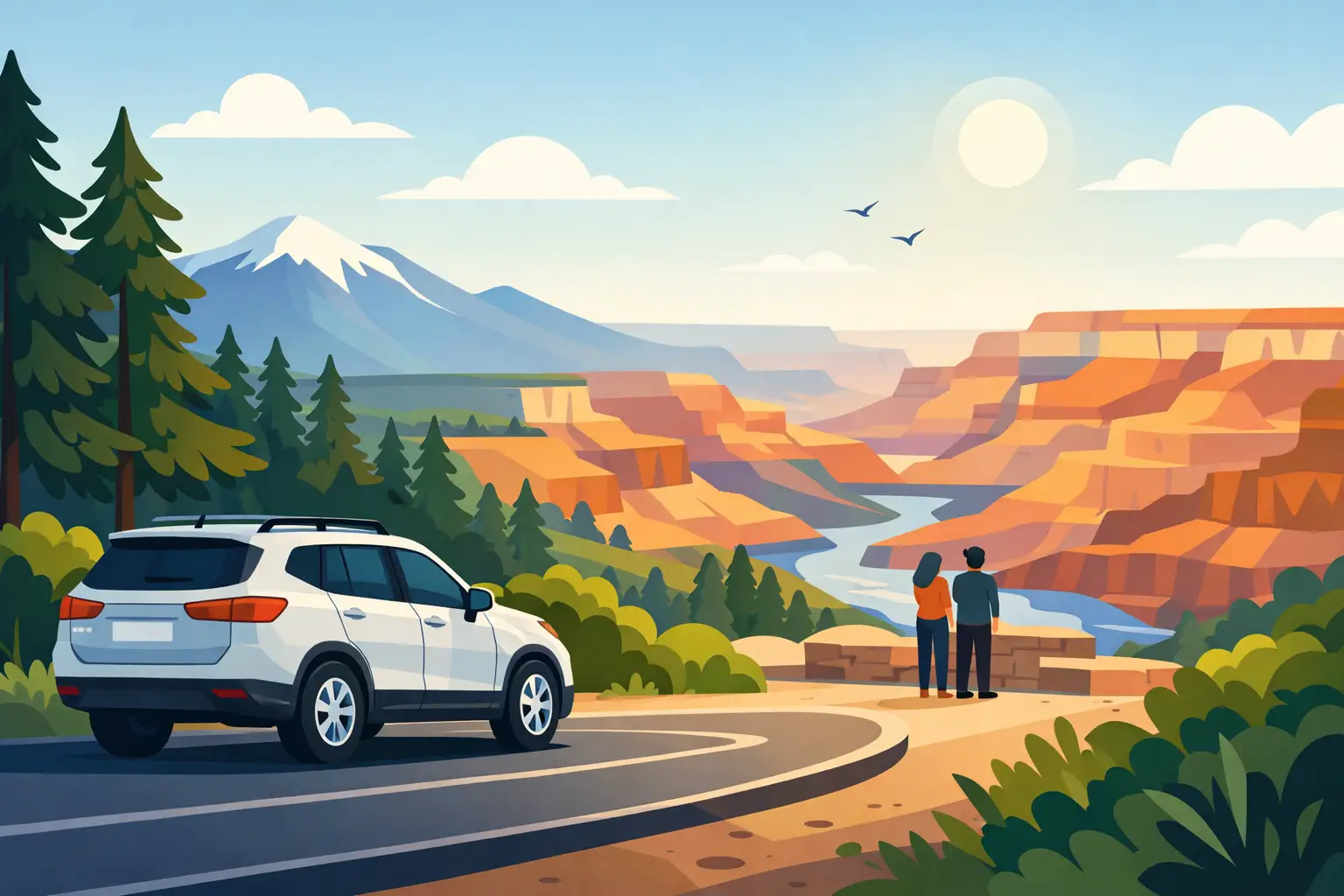
The best part of a Grand Canyon day trip from Flagstaff is that you can trade ponderosa pines for one of the biggest views on earth before lunch, then be back under the trees by evening. Flagstaff sits close enough to make the South Rim feel accessible, yet far enough away that a little planning makes all the difference. Start early, keep your expectations realistic, and leave space for the kind of roadside stops that make Northern Arizona worth slowing down for.
Why Flagstaff makes a great Grand Canyon base
Flagstaff is roughly 80 miles from Grand Canyon National Park’s South Rim, with a drive that usually takes about 1 hour and 30 minutes each way. That puts a full canyon day well within reach without changing campsites, packing up the RV, or giving up a quiet evening back in town.
It is also a smart place to stay when summer desert heat is doing its thing. Flagstaff’s high elevation brings cooler mornings and crisp evenings, which feel especially good after a sunny day along the rim. You can stock up on groceries, fuel, coffee, and picnic supplies before heading north, then come back to restaurants, trails, and a comfortable camp setup rather than another long stretch of highway.
For most visitors, the South Rim is the right choice. It is open year-round, has the classic wide-open overlooks, and offers plenty to see in a single day. The North Rim is beautiful but much farther from Flagstaff, generally requiring around four hours of driving each way. It also closes seasonally due to winter conditions. Save the North Rim for an overnight trip or a future reason to come back.
Planning your Grand Canyon day trip from Flagstaff
Leave Flagstaff early, ideally around sunrise or shortly after. The first few hours at the canyon are usually cooler, calmer, and easier for parking. An early departure also gives you flexibility when construction, weather, wildlife, or a favorite viewpoint asks you to linger.
There are two common ways to reach the South Rim. Many travelers take US-180 northwest through forest and open country, then connect to Arizona 64 near Valle. It is a straightforward, scenic route and a popular choice for visitors coming from central or west Flagstaff. Another option heads north on US-89 toward Cameron before turning west on Arizona 64. This route can be especially handy if you want to see the Desert View side of the park first.
Both are good drives, and the better choice depends on road conditions, your planned entrance, and whether you want to begin near Grand Canyon Village or Desert View. Check the forecast and current park alerts the morning you leave. Northern Arizona weather can change quickly, especially during summer monsoon afternoons and winter snow events.
If you are traveling in a larger RV, consider leaving it at camp for the day and taking your tow vehicle or car. Parking at the South Rim is much easier in a smaller vehicle, and the park shuttle system is designed to remove some of the pressure once you arrive. Flagstaff Mountain RV & Campground makes an easy home base for this kind of setup: settle into your full-hookup site, take the day vehicle north, and return to a quiet, clean place to reset.
A simple South Rim itinerary that still feels unhurried
Arrive at the park in the morning and begin with one or two overlooks instead of trying to see every named point on the map. The canyon is not a checklist. A few moments at Mather Point, Yavapai Point, or another rim overlook can be more memorable than spending the whole day hunting for the next parking lot.
From there, make your way around Grand Canyon Village. This is where you’ll find visitor services, historic buildings, viewpoints, and access to shuttle routes. If the crowds feel heavy, step away from the busiest railings and walk a short distance along the Rim Trail. Even a half-mile on foot can create a little breathing room.
By midday, choose one main experience. Families and casual walkers may prefer a short section of the Rim Trail, where the views arrive without a steep climb back out. More active travelers can take a carefully considered hike below the rim, but this is where good judgment matters. Going down is optional. Coming back up is not.
For an afternoon finish, drive east toward Desert View if conditions and time allow. The route includes changing viewpoints and a different angle on the canyon, with the Desert View Watchtower as a memorable final stop. It is a lovely way to end the day, but do not force it if you are already tired or the weather is building. The canyon will still be there next time.
What to bring for a better rim day
The temperature at the rim may be far cooler than it is in Phoenix or lower-elevation Arizona, but high sun and dry air can still sneak up on you. Bring more water than you think you will need, plus easy snacks or a picnic lunch. Having food in the vehicle keeps you from planning your whole day around a crowded meal stop.
A light layer is worth carrying in every season. Mornings can be chilly, wind can pick up along exposed overlooks, and summer storms can roll through fast. Comfortable walking shoes matter more than hiking boots for most visitors, though a sturdier pair is wise if you plan to go below the rim.
Keep a printed or downloaded park map available because cell coverage can be spotty. A portable phone charger, sun protection, and a small first-aid kit are practical additions. If you bring a pet, remember that pets must stay on leash and are restricted from trails below the rim. They can still enjoy approved areas and the Rim Trail, but a below-rim hike is a people-only plan.
A few canyon realities worth respecting
The Grand Canyon is easy to admire and surprisingly easy to underestimate. Guardrails are not everywhere, rocks can be uneven, and wind near the edge can be stronger than expected. Keep kids close, give other visitors room at viewpoints, and never climb beyond barriers for a photo.
Hiking requires its own level of caution. The park’s most common mistake is treating a downhill walk as the easy half of a hike. On the way back, elevation, heat, and fatigue show up all at once. If you go below the rim, turn around while you still feel strong, eat and drink regularly, and do not count on rescuers to make an ambitious plan work.
Summer visitors should also keep an eye on thunderstorm forecasts. Lightning, sudden rain, and slick ground can change the feel of an exposed overlook quickly. In winter, ice and snow may affect both roads and walking paths. Flexibility is part of traveling well here.
Make the ride home part of the trip
The return to Flagstaff is not just a commute after the main event. It is your chance to watch the light settle over high desert country, spot elk in the distance, and let the day land a little. Fill the tank before leaving the park area if it is getting late, and aim to be back before fatigue turns the drive into a chore.
Once you are back in Flagstaff, a hot shower, cold drink, and camp chair under the pines hit different after a day on the rim. Give yourself an easy evening. The Grand Canyon is enormous, but a good day there does not need to be packed to the minute. Start early, pick a few moments worth savoring, and leave enough energy to enjoy the mountain air when you get home to camp.