

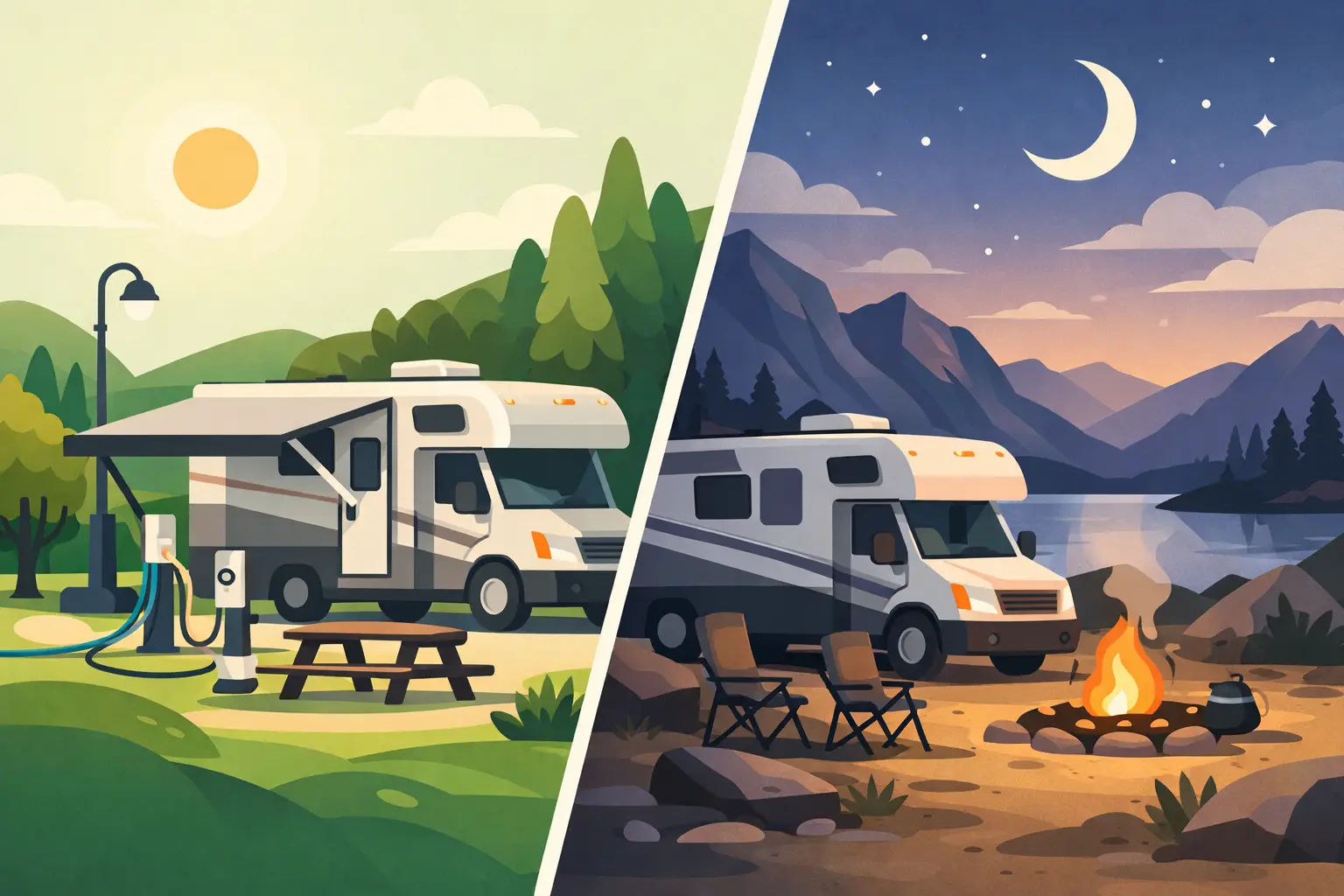
A great RV trip can include a quiet forest road, a cold drink under the pines, and stars bright enough to make you stay up too late. But full hookups versus dry camping is the decision that shapes almost everything else: how long you can stay, how much gear you need, whether everyone sleeps comfortably, and how much time you spend managing tanks instead of enjoying the view.
Neither option wins every trip. Dry camping brings a welcome dose of independence and gets you closer to remote places. Full hookups make the road feel easier, especially when Flagstaff’s mountain weather changes its mind before dinner. The right choice comes down to your rig, your crew, your destination, and what you want your days off the grid to actually feel like.
What Full Hookups Give You
A full-hookup RV site provides water, electric service, and a sewer connection right at your site. That means you can run the systems your RV was built for without watching your battery percentage, rationing showers, or planning the next dump-station stop.
For travelers staying several nights or using Flagstaff as a base camp, that convenience changes the pace of the trip. You can return from a hike at Walnut Canyon, a day in Sedona, or a scenic drive toward the Grand Canyon and take a real shower. You can make dinner, charge cameras and e-bikes, run the heat on a chilly mountain morning, and settle in without a tank-level calculation hanging over the evening.
Full hookups are especially useful for families, pet owners, remote workers, and anyone traveling in a larger rig. Kids produce laundry faster than anyone expects. Pets appreciate predictable routines. And if you need dependable power and WiFi for a work call, campground infrastructure is usually a better bet than hoping a remote signal holds steady.
At Flagstaff Mountain RV & Campground, full-hookup sites pair the practical side of RV travel with the part people come north for: cool temperatures, clean mountain air, and a quieter place to land about a mile from downtown. You still get the feeling of a mountain retreat, just without treating every gallon of fresh water like it is liquid gold.
The comfort is more than a luxury
Calling full hookups a luxury can miss the point. For many travelers, they are what makes an RV trip sustainable. A sewer connection lets you use your onboard bathroom normally. Electricity keeps refrigerators, medical devices, CPAP machines, laptops, and climate control running reliably. Water at the pedestal means you can cook, clean, and shower without hauling jugs or breaking camp to refill.
That matters even more when a short stay turns into a week or two. Full hookups give you room to slow down. Instead of moving every day to manage supplies, you can take a coffee downtown, ride local trails, browse a farmers market, or simply enjoy a calm afternoon outside your rig.
When Dry Camping Is the Better Story
Dry camping, often called boondocking or dispersed camping depending on the location, means camping without utility connections. You rely on the water, battery capacity, propane, solar setup, generator, and holding tanks you bring with you. Some developed campgrounds offer dry sites, while dispersed camping may place you on public land where the rules and services are very different.
The appeal is real. Dry camping can put you farther from crowds and closer to sunrise views, trailheads, and the kind of silence that makes city noise feel like a distant memory. It can also cost less than a developed RV park, though that savings may narrow after fuel, campground fees, generator use, water runs, and the equipment needed to camp comfortably.
It works best when your expectations match the setup. A two-night escape in a self-contained trailer can feel refreshingly simple. A week of dry camping with four people, a small freshwater tank, summer heat, and no reliable cell service can feel less like freedom and more like a chore chart.
Dry camping asks more of your RV and your habits
Successful dry camping starts before you leave home. Fill your freshwater tank, empty your gray and black tanks, charge your batteries, and know how long your refrigerator, lights, water pump, and furnace can run. If you use solar, remember that shaded campsites, monsoon clouds, and short winter days affect charging. If you use a generator, check local rules, quiet hours, and fire restrictions before relying on it.
Water is usually the first pressure point. Navy showers, paper plates, and a conservative dishwashing routine stretch a tank, but they also add friction to a vacation. Your gray tank can fill before your fresh tank is empty, particularly if everyone showers in the RV. Black tank capacity is another limit, and it is one that is much easier to manage at a site with sewer.
Then there is trash, wastewater, and sanitation. Dry camping is not a free pass to leave less-visible mess behind. Pack out everything, use designated dump stations, respect posted stay limits, and choose established sites rather than creating new damage. The best remote campsites stay beautiful because campers take that responsibility seriously.
Full Hookups Versus Dry Camping in Flagstaff
Flagstaff makes this choice more interesting than it might be in a flat, predictable climate. At roughly 7,000 feet, the city offers a welcome break for travelers escaping desert heat from Phoenix, Southern California, or Las Vegas. It also brings cool nights, quick afternoon storms during monsoon season, and shoulder-season cold that can catch unprepared campers off guard.
In summer, dry camping can be wonderful when you have shade, enough water, and an established legal campsite. The forest setting is hard to beat. Yet afternoon storms can turn dirt access roads muddy, and smoky conditions or fire restrictions can change plans quickly. A full-hookup site offers a dependable reset button: power for fans or heat, a proper place to clean up, and no concern about conserving enough water through the next day.
During spring and fall, temperatures can swing sharply from sunny afternoons to frosty nights. Your furnace uses battery power, and cold-weather camping may require more attention to plumbing and tank protection. Full hookups do not erase every cold-weather concern, but reliable electricity and water access make the experience considerably more comfortable for many RVs.
If your goal is to explore downtown restaurants, Arizona Snowbowl, nearby trails, and Northern Arizona day trips, a hookup site often makes more sense than relocating every couple of days. You get a stable home base, a clean place to return to, and easier access to supplies when plans shift.
Choose Based on Your Trip, Not the Campground Label
The most useful question is not, “Which type of camping is better?” Ask, “What do I want to spend my time doing?”
Choose full hookups when you want long showers, regular laundry, reliable connectivity, easy tank management, and a comfortable base for several days. They are also the practical choice when you are traveling with children, working remotely, managing health needs, bringing pets, or visiting during colder conditions.
Choose dry camping when the destination itself is the point, your RV is equipped for self-sufficient travel, and you are comfortable trading convenience for solitude. It is a strong fit for short stays, experienced campers, and travelers who genuinely enjoy the planning that comes with managing resources.
A blended trip is often the sweet spot. Spend a few nights dry camping near the landscapes that make you feel far away, then book a full-hookup site to recharge batteries, refill water, empty tanks, wash clothes, and enjoy a no-stress evening. That rhythm gives you both the wild side of RV travel and the comfort that keeps it fun.
A Few Planning Details That Prevent Bad Surprises
Before heading out, confirm that your intended dry-camping area is open and legal for overnight use. Land-management rules, seasonal closures, fire restrictions, road conditions, and stay limits can change. Do not assume a pin on a map means a suitable RV site, particularly with a larger trailer or motorhome.
For a full-hookup stay, check your rig’s electrical requirements, hose lengths, and any site-length needs before arrival. Pack a water-pressure regulator, sewer supports if you use them, and the adapters your RV may need. Those small preparations make setup quick, which means more time for the reason you came in the first place.
There is no prize for camping with the fewest amenities, and there is no shame in choosing a site that lets everyone sleep well. Pick the setup that leaves you rested enough for an early trailhead, a slow coffee under the pines, and one more clear Flagstaff night outside.