

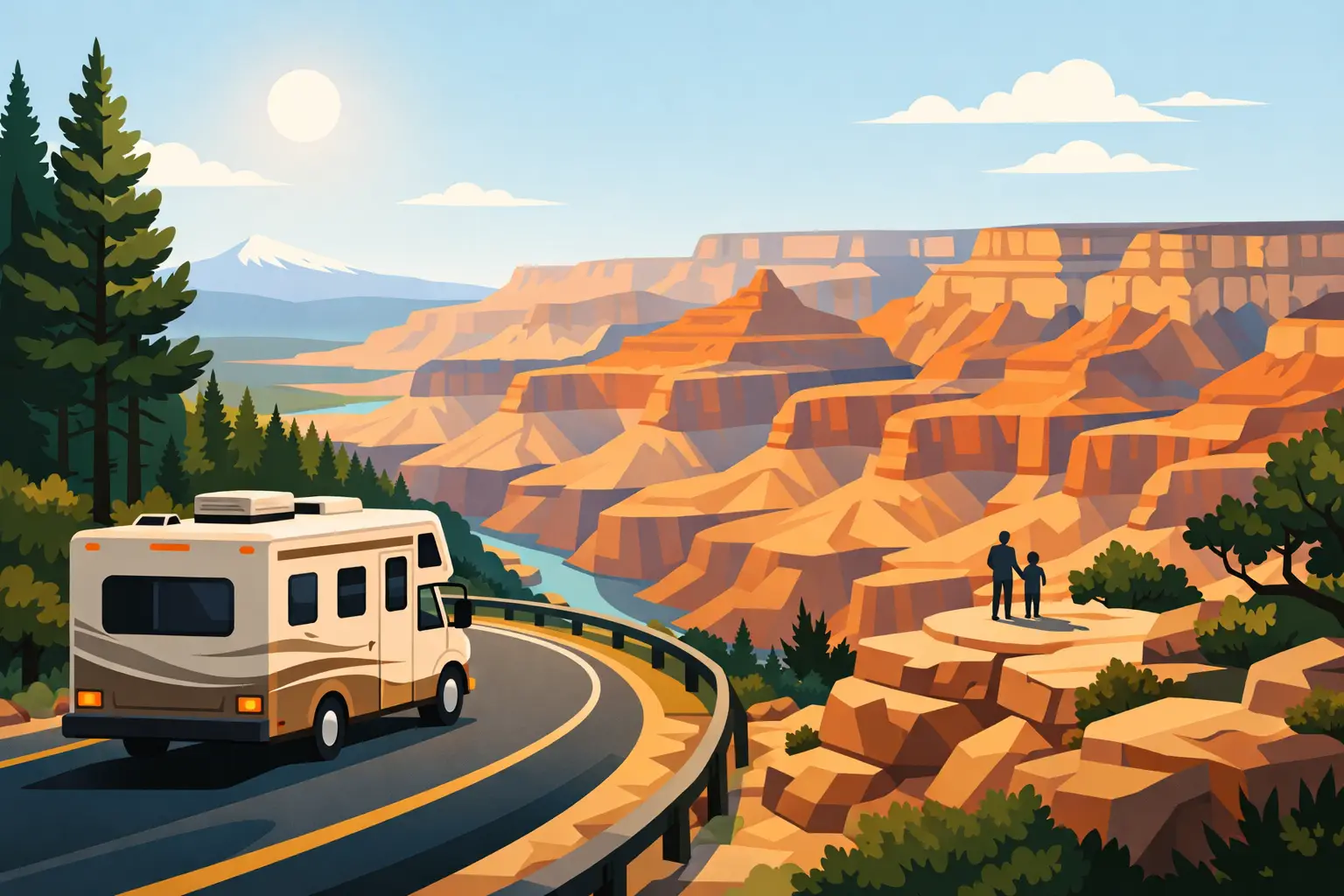
The first overlook has a way of quieting even the busiest RV crew. One minute you are rolling through high-country pines, and the next the ground opens into a canyon so vast it makes every screen photo feel laughably small. A Grand Canyon RV day trip from Flagstaff is absolutely doable, but the difference between a great day and a long, frazzled one comes down to timing, vehicle planning, and giving yourself room to slow down once you arrive.
Flagstaff makes an especially comfortable launch point. You get cool mountain mornings, groceries and coffee close by, and a place to return to after a full day at the rim. The South Rim is the practical choice for a day trip, with paved viewpoints, visitor services, and enough scenery to make a single day feel big.
Why a Grand Canyon RV Day Trip Works From Flagstaff
From Flagstaff, the South Rim is roughly 80 miles away, depending on the route and where you start. Most travelers should expect about 1.5 to 2 hours of drive time each way in normal conditions. That may sound like a lot for one day, but this is Northern Arizona driving at its best: ponderosa forest, high desert, open sky, and the kind of changing terrain that makes the road part of the outing.
The real advantage is returning to Flagstaff instead of trying to squeeze an overnight stay near the park into an already busy itinerary. You can watch the canyon shift colors in late afternoon, then head back to a quiet site, hot shower, and your own dinner setup. For travelers escaping lower-elevation heat, that cool Flagstaff evening hits different at altitude.
It does depend on your pace. If you want to hike far below the rim, photograph sunrise and sunset, visit every museum, and linger at every overlook, make the Grand Canyon an overnight or multi-day stop. A day trip is best for travelers who want the classic South Rim experience without turning the day into a checklist.
Pick the Right Vehicle Plan Before You Go
You can drive a motorhome or towable setup toward the Grand Canyon, but it is not always the easiest way to experience the South Rim. Parking areas can be busy, spaces suitable for longer rigs are limited, and navigating crowded lots is nobody’s idea of a relaxing vacation afternoon.
If you are traveling with a tow vehicle, the simplest plan is often to leave the RV at your campsite and take the smaller vehicle. You will have an easier time parking, changing viewpoints, and responding to afternoon weather. This also means you can return to your full hookups, stocked fridge, and comfortable bed without breaking camp.
For RV travelers who plan to take the rig, start early and know your length, height, fuel range, and turning needs. Do not count on every lot being a fit. Check current Grand Canyon National Park parking guidance before departure, and be prepared to use designated oversized-vehicle parking if available. Once you are there, use the park shuttle when it makes sense rather than moving a large vehicle from overlook to overlook.
Before leaving Flagstaff, take care of the basics:
- Fill the fuel tank and top off drinking water.
- Download maps because service can be inconsistent on the road and around the park.
- Pack layers, sun protection, snacks, and more water than you think you need.
- Bring a paper map or screenshot key directions in case your navigation reroutes poorly.
- Check the forecast, road conditions, and park alerts that morning.
Those few minutes of prep are especially worthwhile in spring, fall, and winter, when wind, snow, ice, or road work can change the feel of the drive.
The Best Route and Timing From Flagstaff
A common route heads north from Flagstaff on US 180, then connects toward the South Rim via Arizona 64. It is scenic and straightforward in good conditions, though weather or seasonal road closures can change the best option. Navigation apps are helpful, but current road information should have the final word, particularly after a storm.
Leave earlier than your vacation instincts might suggest. A 7:00 or 8:00 a.m. departure gives you a more relaxed arrival window, better parking odds, and time to enjoy the canyon before the busiest part of the day. Morning light is also kinder for photos at many east-facing viewpoints, while the air tends to feel calmer before afternoon winds pick up.
A Day That Feels Full, Not Rushed
Arrive at the South Rim in the morning and begin at a visitor area or major overlook to get oriented. Spend a little time simply looking. The Grand Canyon is one of those places where trying to immediately optimize the experience can get in the way of having one.
From there, choose two or three priorities. For some families, that means a short section of Rim Trail, a shuttle ride, and a ranger program if one is offered. For couples or photographers, it may mean several overlooks with a long lunch break in between. If your group wants a bigger walk, pick a short, realistic route and remember that every downhill step becomes an uphill return.
Plan to begin heading back toward Flagstaff before dark if you are not comfortable driving unfamiliar mountain roads at night. Sunset at the canyon is beautiful, but it can also mean leaving with a crowd, facing colder temperatures, and extending an already long day. There is no wrong choice here. Stay for golden hour if that is the moment you came for, but make the drive home an intentional part of the plan.
What to Do Once You Reach the South Rim
The best Grand Canyon days have some structure but leave room for wonder. Avoid trying to cover the entire park. The rim stretches far beyond what a day-tripper can fully absorb, and the views do not improve just because you saw more of them.
Walk a portion of the paved Rim Trail for a low-pressure introduction. The changing angles reveal side canyons, cliffs, and layers that can disappear from a single overlook. Use the shuttle system when routes are operating and it fits your plan. It reduces parking hassle and lets everyone look out the window rather than watch for pedestrians and tight turns.
If you are hiking below the rim, be conservative. The elevation at the South Rim is high, the sun can be intense even on a mild day, and the climb back out is more demanding than it appears from above. A short descent with a firm turnaround time is often the smart call for a day trip.
Bring your own picnic food or enjoy the available services, but do not schedule the whole day around a meal reservation. The canyon deserves some unplanned time. Find a bench, eat a sandwich, and watch the shadows move across the walls.
Weather Is Part of the Adventure
Flagstaff and the South Rim both sit at high elevation, which means the forecast can be surprisingly different from Phoenix, Las Vegas, or Southern California. Summer afternoons can bring thunderstorms. Spring and fall may start cold and turn warm by midday. Winter can bring snow, icy roads, and dramatic canyon views, but it also requires more flexibility.
Dress in layers rather than assuming one temperature will hold all day. A light insulating layer, rain shell, hat, and sturdy walking shoes go a long way. Keep water accessible in the vehicle, not buried beneath camp chairs and gear. Pets need special consideration too: temperatures, pavement, park rules, and the time they can safely spend in a vehicle all matter.
If conditions look questionable, do not force the trip. Flagstaff has plenty of good ways to spend a mountain day, and the canyon will still be there tomorrow. Flexible travelers usually get the better story.
Come Back to a Proper Flagstaff Reset
After a big-view day, returning to a calm campground is part of the reward. At Flagstaff Mountain RV & Campground, you can settle into a spacious full-hookup site, get the laundry moving, check in with home on fast WiFi, and let the dog stretch out after a day of travel. Downtown Flagstaff is close enough for a celebratory dinner, local beer, or an easy coffee run the next morning.
That breathing room matters. The Grand Canyon is not a place to rush through, and neither is the rest of Northern Arizona. Build your day around the views, keep your vehicle plan simple, and leave a little daylight for the drive back through the pines. The best souvenir is not checking off every overlook. It is arriving back at camp tired in the good way, with canyon dust on your shoes and nowhere else you need to be.