

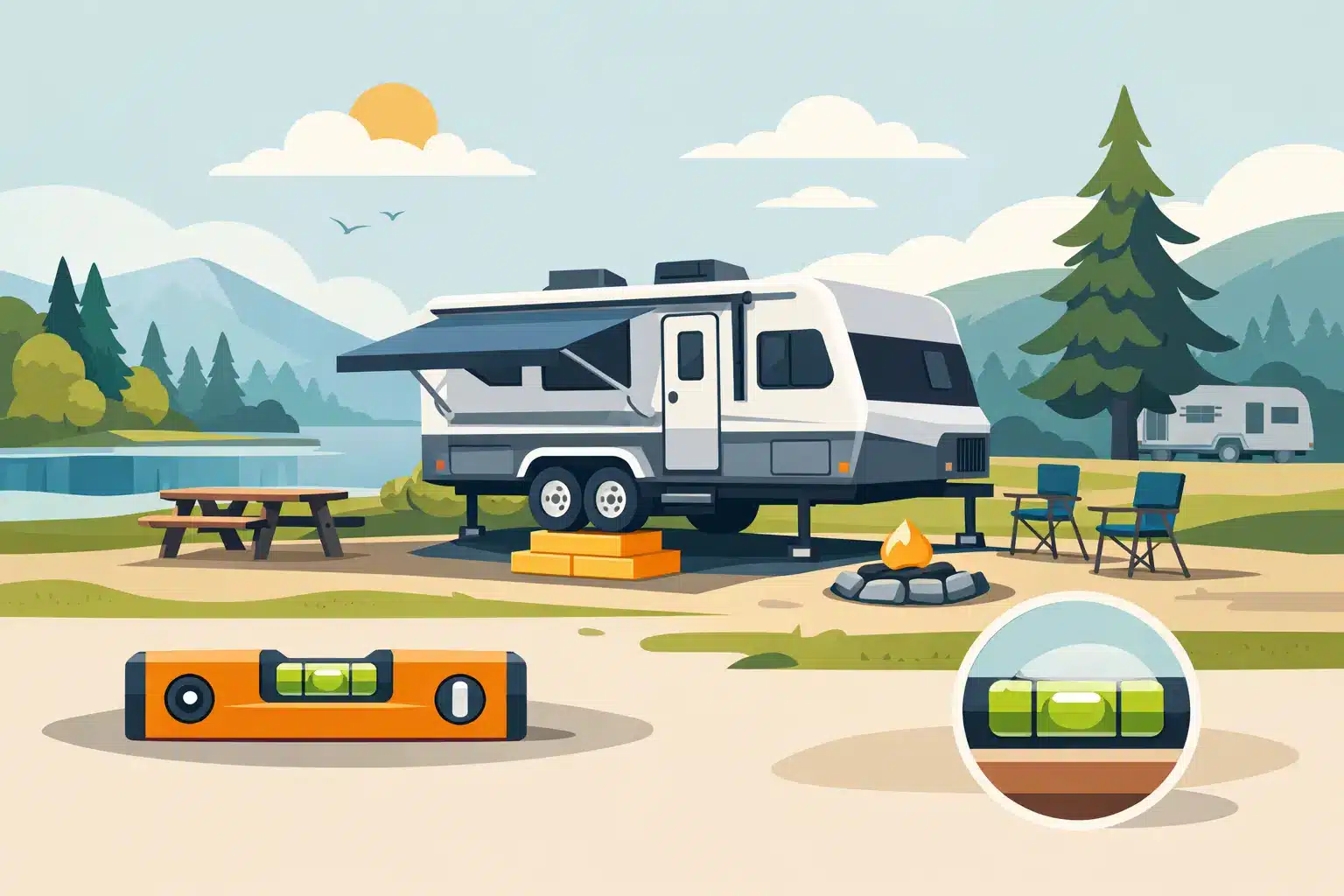
A campsite can look great on a reservation map and still make arrival feel like a puzzle. When you choose level RV sites, you give yourself a much easier first 20 minutes: less time stacking blocks, less strain on your fridge and slides, and more time enjoying the cool pine air. In Flagstaff, where mountain terrain is part of the appeal, a thoughtfully graded site can make a real difference.
Level does not mean perfectly flat in every direction. Good RV sites are designed with enough stable, usable pad space to get your rig safely positioned and comfortably settled with a few simple adjustments. The goal is not to chase a ruler-perfect setup. It is to choose a site that fits your RV, your plans, and the kind of stay you want.
Why a Level Site Makes the Whole Stay Easier
The practical benefits begin before you even unhitch. A reasonably level pad makes backing in more predictable, especially after a long drive through Northern Arizona. It also means your steps sit securely, cabinet doors behave themselves, and your sleeping area does not feel like it is subtly leaning downhill all night.
Leveling matters for the systems inside your RV, too. Refrigerators, particularly older absorption-style models, operate best when the coach is close to level. Water in sinks and showers drains as intended. Slides and stabilizers can be used more confidently when the rig is properly supported. These details may sound small, but they add up quickly on a weekend stay or a few weeks of mountain living.
There is a comfort side as well. You came to Flagstaff for crisp mornings, trail days, downtown coffee, and evenings that cool down when lower elevations are still cooking. You should not spend those first hours wrestling with an awkward site.
How to Choose Level RV Sites Before You Arrive
A reservation page cannot always show every inch of grade, but it can give you the information that matters most. Start by looking at the site type, its dimensions, and whether it is a back-in or pull-through space. Then consider your own rig honestly: its overall length, the location of your hookups, slide-outs, awnings, and tow vehicle.
Match the Site to Your Actual RV Length
Do not book based only on your trailer or motorhome body length. Include the tongue or rear ladder, bike rack, towed vehicle, and the space you need to maneuver. A site can technically accommodate a 30-foot trailer while still feeling cramped if your truck needs to park at an angle or your slide-out opens toward a tight edge.
Spacious sites give you more options when you are fine-tuning your position. That extra room can be especially useful for families unloading bikes, travelers with pets, or anyone planning to work outside for an hour before heading into town.
Ask About the Pad Surface and Grade
A firm, maintained RV pad is more useful than a site that simply appears flat from a distance. Gravel, compacted surfaces, and paved pads each have their advantages, but the key is drainage, stability, and enough width for your tires and leveling blocks.
If a campground provides a park map or site details, use them. If you are traveling in a larger rig, making a quick call before booking can save a lot of guesswork. Ask whether the site is suited to your length, whether there are notable grade changes, and how close the hookups are to where your connections will land.
A small side-to-side adjustment is normal. A significant front-to-back slope may require more blocks than you want to deploy, particularly if you are arriving after dark or during a summer thunderstorm.
Think Beyond the Parking Pad
The best site is not always the flattest one on paper. Look at what surrounds it. Is there room to open your awning without crowding a neighbor? Is the picnic area usable? Will your dog have a comfortable route in and out of the RV? Is the site positioned for the quiet, easygoing kind of evening you had in mind?
For remote workers and connected travelers, consider WiFi access and proximity to facilities. For a one-night stop, quick pull-in convenience may matter most. For a longer stay, you may value space, privacy, and a setup that feels good to come home to after a day at Walnut Canyon, Arizona Snowbowl, or downtown Flagstaff.
What to Check When You Pull In
Even well-planned trips benefit from a quick arrival routine. Before unhooking or extending slides, step out and look at the site from both sides. Check for obvious low spots, loose gravel, standing water, branches, or obstacles that could interfere with your roofline, awning, or slide-outs.
Use a small bubble level, a smartphone level app, or your RV’s built-in leveling display to assess the coach after you are in position. Check side to side first, then front to back. For towables, leveling side to side before unhitching is usually the easier path. For motorhomes with automatic leveling, follow the manufacturer instructions and make sure the ground beneath the jacks is stable.
Take your time with this part. Fast setup is great, but rushed setup is how leveling blocks get placed unevenly, tires end up poorly supported, or hookups are stretched farther than they should be. Once the RV is stable, connect water, sewer, and power without forcing hoses or cords into sharp bends.
The Trade-Off: Level Is Not the Only Thing That Matters
It is easy to focus on grade and overlook the rest of the camping experience. A perfectly level site beside a busy road may be less appealing than a slightly sloped site in a quieter part of the park. A pull-through can make a one-night stop wonderfully simple, while a more private back-in may be worth the extra setup time for a weeklong stay.
Weather also changes the equation. Flagstaff’s high elevation brings welcome summer temperatures, but afternoon rain can roll through quickly. A site with solid drainage and a stable surface may be the better choice over one that looks flatter but tends to collect water. In cooler months, consider sun exposure, tree cover, and how early frost may affect your morning departure.
Your travel style should lead the decision. Couples passing through on the way to the Grand Canyon may prioritize easy access and a quick departure. Families might want more outdoor room. Travelers staying up to 30 days may place dependable full hookups, clean showers, laundry, and fast WiFi ahead of a few extra minutes spent leveling.
A Simple Setup Kit Is Worth Carrying
You do not need a garage full of gear to handle a typical campsite. A compact set of leveling blocks, wheel chocks, a reliable level, and pads for stabilizer jacks will cover most situations. Keep them somewhere accessible, not buried beneath chairs, cooking gear, and the things you packed for a beach weekend three states ago.
It also helps to inspect your blocks occasionally. Cracked plastic, warped pieces, or improvised stacks of lumber can create instability. Use gear rated for the job, place it on firm ground, and never crawl beneath an RV that is supported only by leveling equipment.
Choose a Site That Lets You Settle In
A good RV site does more than keep your coffee from sliding across the counter. It gives your trip an easy rhythm. You arrive, get connected, take a breath, and start enjoying where you are.
At Flagstaff Mountain RV & Campground, that rhythm can mean a clean, spacious full-hookup site, a quick load of laundry, a walk with the dog, and a relaxed night under cooler mountain skies just a mile from downtown. Choose the site that fits your rig and your pace, then leave room in the itinerary for the part that matters most: being here.