
A mountain trip can go two very different directions after you turn off the highway. One ends with a level site, a hot shower, reliable power for the coffee maker, and enough WiFi to check tomorrow’s trail conditions. The other ends farther from the bustle, with fewer conveniences and a little more room for the sounds of the forest. That is the real choice behind an RV park versus campground – not which one is better overall, but which one fits the way you want to travel.
For a quick stop in Flagstaff, a week of trail time, or a longer escape from desert heat, the right home base makes the whole trip easier. Here is what separates the two, where the lines blur, and how to choose without overthinking it.
RV Park Versus Campground: The Core Difference
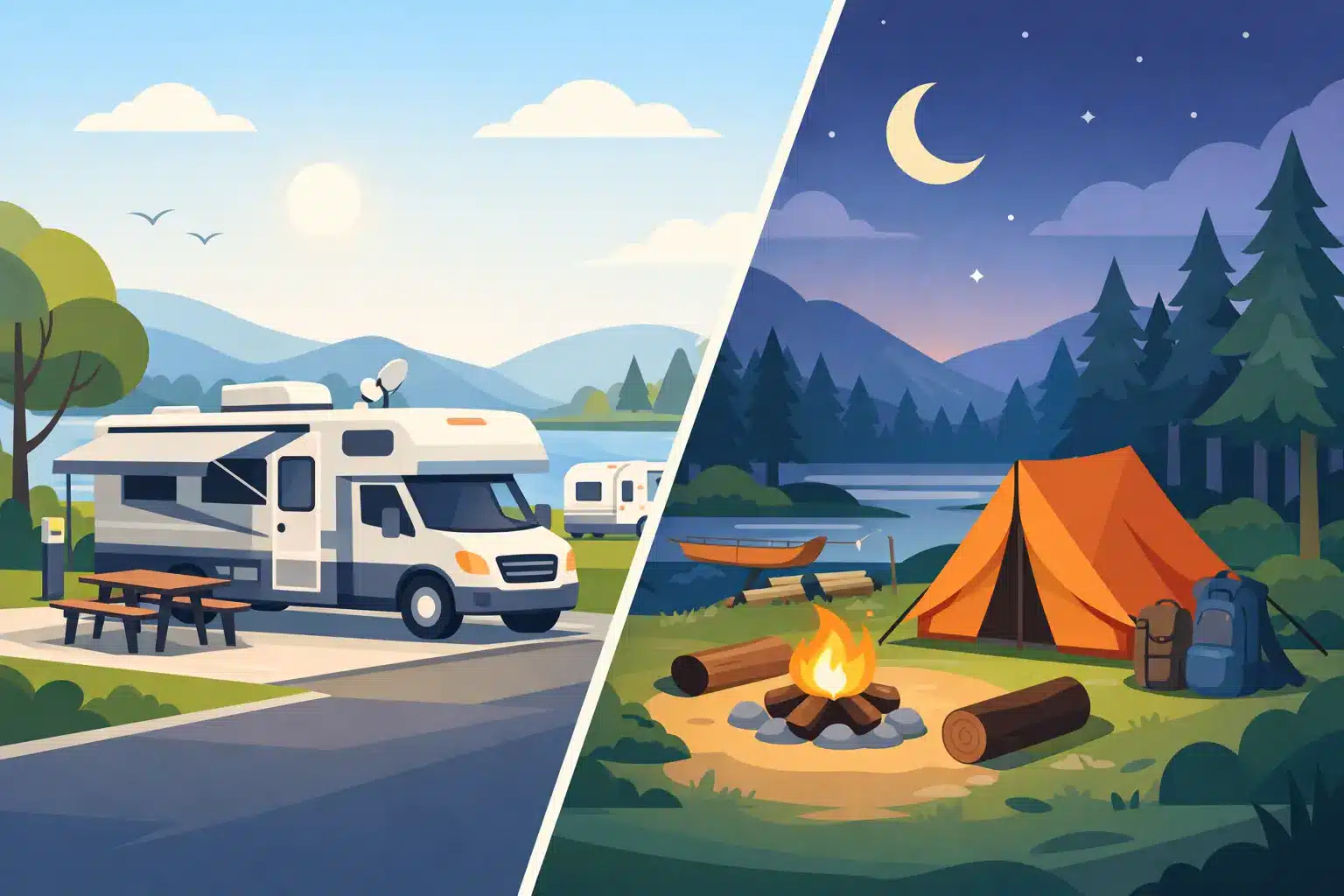
An RV park is built around the practical needs of RV travel. Most sites are designed for rigs of varying sizes and typically offer hookups for water, electricity, and sewer. You are also more likely to find amenities such as restrooms, showers, laundry, WiFi, a camp store, paved or well-maintained internal roads, and a straightforward reservation system.
A campground is a broader term. It may include tent sites, cabins, primitive sites, partial-hookup RV sites, or a mix of all of them. Campgrounds can be private, municipal, state-run, or part of a national forest or park. Their focus is often the setting itself: a lake, a trail system, a canyon, or a pocket of trees where you can feel farther away from town.
There is plenty of overlap. Some campgrounds have full hookups and polished facilities. Some RV parks feel wonderfully wooded and quiet. Still, the usual distinction is simple: RV parks prioritize comfort and infrastructure, while campgrounds often prioritize a more outdoors-first experience.
When an RV Park Makes More Sense
An RV park is often the easy answer when your RV is part transportation, part vacation home, and part base camp. You do not have to plan your day around battery levels, tank capacity, finding a dump station, or a spotty cell signal. You pull in, get settled, and get on with the fun part of the trip.
Full hookups change the rhythm of a stay
For weekend travelers, full hookups mean less setup stress and less cleanup when it is time to head out. For guests staying a week or more, they can make a major difference. You can take normal showers, run the air conditioner or furnace as needed, cook in the rig, and avoid packing up just to handle water and waste tanks.
This matters in Flagstaff, where the weather can shift quickly. Summer afternoons can bring rain, nights can cool down, and shoulder-season mornings may be crisp. Having dependable utilities gives you a comfortable place to land after a long hike, a day at the Grand Canyon, or an afternoon wandering downtown.
Amenities are not just extras
Laundry, clean showers, a convenience market, and dependable WiFi may not sound glamorous when you are planning a road trip. They feel very glamorous on day six, when the kids need clean clothes, your dog found a mud puddle, and someone needs to take a work call before heading to Sedona.
Good WiFi is especially valuable for travelers who blend work and wandering. It gives you the freedom to answer emails in the morning and head for a trail by lunch. It also helps with the everyday details: checking weather, confirming attraction hours, finding a dinner spot, and mapping the next leg of your route.
Location can give you more of the day back
A park close to town is useful when you want outdoor access without treating groceries, coffee, restaurants, or gear supplies like a full expedition. In Flagstaff, being near downtown means you can spend the morning on a trail, enjoy a local meal in the evening, and still return to a quiet site without a long drive on dark roads.
That balance is a big reason travelers choose a short-term RV park such as Flagstaff Mountain RV & Campground. You get the pine air and cooler elevation people come for, along with full hookups, clean facilities, fast WiFi, and a practical launch point for Northern Arizona adventures.
When a Campground Is the Better Call
A campground is often the right fit when your main goal is to unplug and spend more time outdoors than inside your rig. If you are tent camping, traveling light, or looking for an overnight that feels more remote, fewer amenities may actually be part of the appeal.
You want a more remote setting
Some campgrounds place you close to a specific landscape: a lakeshore, trailhead, canyon overlook, or forest road. That can mean less driving to the activity you came for and a stronger sense of being away from it all. The trade-off is that you may have limited services, no hookups, no showers, or no nearby store when you realize you forgot ice.
For self-contained RVs, dry camping can be a great reset. It encourages slower mornings, campfire dinners, and stargazing that does not compete with city lights. Just be honest about how long your tanks, batteries, food supply, and patience for rougher roads will last.
Your budget is built around simplicity
Basic campgrounds can cost less than amenity-rich RV parks, especially on public land. That lower nightly rate can be a smart move for a short overnight or a trip where you plan to move frequently.
But the cheapest site is not always the best value. Add in a dump station fee, a laundromat visit, ice, extra fuel to reach town, or a night at a hotel because the weather turned rough, and the gap can narrow. Consider the full cost of comfort, not just the posted site price.
You are comfortable being self-sufficient
Campgrounds reward preparation. Before you arrive, check site length, road conditions, generator rules, fire restrictions, water availability, and whether your reservation guarantees a site that fits your rig. A beautiful campground is not much fun if your trailer cannot navigate the access road or you arrive with too little battery power for a cold night.
This is not a reason to avoid campgrounds. It is simply a reason to choose them intentionally. A little planning goes a long way when the nearest convenience store is several miles away.
The Questions That Make the Choice Clear
Instead of choosing based on labels alone, think about the trip you are actually taking. How long are you staying? What kind of rig do you have? Are you traveling with pets, kids, or someone working remotely? Do you want to cook every night, or will you be exploring Flagstaff restaurants? Are you chasing quiet trail mornings, easy access to town, or both?
A one-night stop while crossing Arizona may call for a simple campground if you are fully stocked and ready to roll. A long weekend with bikes, dogs, and a packed itinerary may be much easier in an RV park. A two-week summer stay usually favors full hookups, laundry, showers, and WiFi, especially when you want to enjoy the cool mountain pace without turning campsite chores into a daily project.
Site layout deserves attention too. Travelers often focus on hookups and forget the feel of the place. Look for enough room to park comfortably, extend your awning, walk the dog, and relax outside without feeling like you are camping in your neighbor’s living room. Quiet hours, clean common areas, and attentive onsite management can matter just as much as the amenity list.
A Flagstaff Stay Can Offer Both
Flagstaff is a place where you do not need to choose between mountain time and everyday ease. You can wake up under tall pines, spend the day hiking, biking, sightseeing, or taking a scenic drive, then return to a hot shower and a level site before heading into town for dinner.
That middle ground works particularly well for travelers using Flagstaff as a base for the Grand Canyon, Walnut Canyon, Arizona Snowbowl, Sedona, or a slower weekend of local coffee, stargazing, and forest trails. You can keep the RV comfortable and stocked while still making the outdoors the center of the trip.
Choose the Stay That Lets You Relax
The best choice in an RV park versus campground comes down to how much support you want around your adventure. Pick a campground when remoteness and simplicity are the point. Pick an RV park when you want the freedom to explore hard, rest well, and keep the practical details easy.
Before you book, picture the last hour of your day: dusty shoes by the door, a cool Flagstaff evening settling in, dinner nearby or on the grill, and tomorrow’s route already taking shape. Choose the site that makes that moment feel easy.