
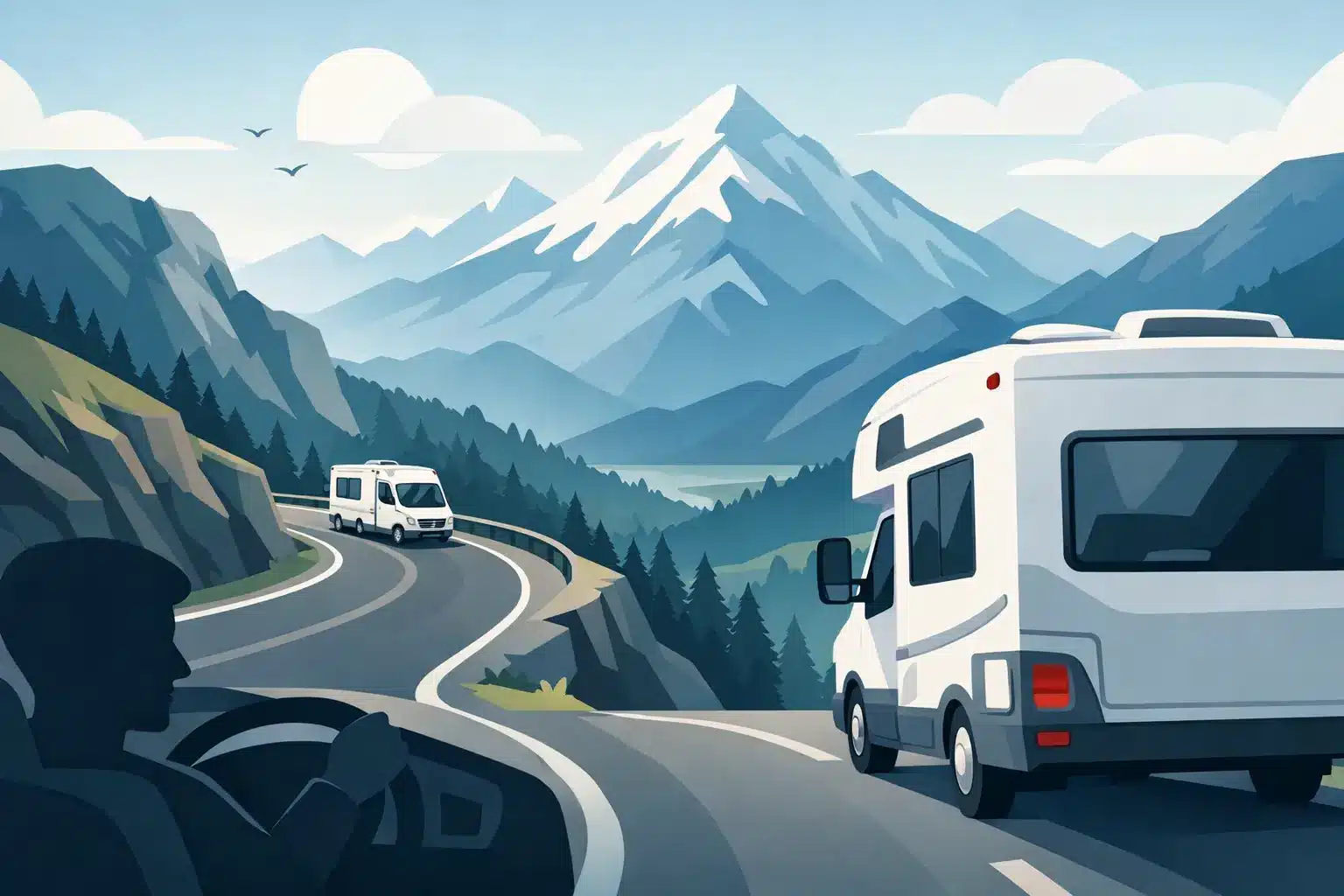
That first climb out of the desert can make even seasoned RV travelers pause. The road rises, the temperature drops, and your rig suddenly feels a lot bigger than it did at the fuel stop. So, can RVs handle mountain roads? Absolutely, provided the route matches your rig, the weather is on your side, and you drive with patience instead of trying to keep pace with every car behind you.
Mountain travel is one of the best parts of RV life. It brings pine air, cooler summer afternoons, trail access, big skies, and quiet camp evenings. It also asks more from your engine, brakes, tires, and attention. A little planning turns mountain driving from a white-knuckle chore into part of the trip.
Can RVs Handle Mountain Roads Safely?
Most RVs can handle well-maintained mountain highways. That includes motorhomes, travel trailers, fifth wheels, camper vans, and truck campers. The real question is not whether an RV can climb a mountain road. It is whether your specific RV can travel that specific road comfortably and safely.
A wide, paved highway with steady grades is very different from a narrow forest road with sharp switchbacks, loose shoulders, low branches, and no place to turn around. A 40-foot Class A towing a vehicle may be a great fit for an interstate climb, while a smaller camper van or truck camper is the better choice for a winding scenic byway.
Before committing to a route, consider your overall length, height, weight, towing setup, ground clearance, and braking capacity. Then look beyond the mileage. Road grade, lane width, curves, construction, weather, and available pullouts matter more than how close a destination looks on a map.
Start With the Right Route, Not the Shortest One
Navigation apps are useful, but they do not always understand RV clearance, steep grades, or trailer restrictions. A shortcut that saves 20 minutes can become a long, stressful afternoon if it sends you onto an unpaved road or through a tight mountain town.
Choose major highways and established scenic routes when possible, especially if you are driving a larger rig. These roads typically have wider lanes, more predictable grades, better shoulders, and more places to pull over if your engine temperature climbs or a passenger needs a break.
Check your route shortly before departure. Seasonal construction, wildfire-related closures, storms, and local restrictions can change plans quickly in the high country. For Northern Arizona travelers, elevation is part of the equation. Flagstaff sits near 7,000 feet, and weather can shift from warm sunshine to afternoon rain, gusty winds, or even snow during shoulder seasons.
If a route description includes phrases like “high clearance recommended,” “four-wheel drive advised,” or “narrow road with no turnaround,” take it seriously. Those roads may be fantastic in a Jeep or a small adventure van, but they are not automatically RV roads.
Climbing: Give Your Engine Room to Work
Mountain climbs are hard work, and it is normal for an RV to slow down. Let it. Trying to hold highway speed on a long grade can push the engine and transmission harder than necessary.
Use tow/haul mode if your vehicle has it. It helps manage shifting and can reduce transmission hunting on climbs. On steep grades, manually selecting a lower gear may keep the engine in a better power range and prevent repeated upshifts and downshifts.
Watch your gauges, particularly engine temperature and transmission temperature if your rig displays it. If temperatures begin climbing beyond normal, turn off the dash A/C if needed, ease back on the throttle, and pull into a safe turnout if the vehicle needs time to cool. Never stop in a travel lane or on a narrow shoulder just because the grade feels intense.
Altitude also reduces engine power. At higher elevations, your RV may feel less responsive even on a road you would normally consider easy. That is expected. Build more time into the day and accept a slower climb.
Descending Is Where Good Habits Matter Most
Going downhill is often more demanding than going up. The biggest mistake is relying on the brake pedal to control your speed all the way down. Continuous braking can overheat brakes, weaken stopping power, and create a dangerous situation fast.
Start the descent slowly, in a lower gear. A good rule is to descend in the same gear you needed to climb, though conditions and your vehicle may call for an even lower gear. Tow/haul mode and engine braking can help hold speed without making your brakes do all the work.
Use the brakes firmly to bring your speed down when needed, then release them and let the lower gear do its job. Avoid riding the brakes for miles. If you smell hot brakes, notice fading pedal feel, or see a brake warning, pull over at the first safe location and give everything time to cool.
Trailer travelers should confirm that their brake controller is properly adjusted before a mountain trip. You want the trailer helping the tow vehicle slow down, not pushing it downhill. If you have not tested the setup recently, do it on level pavement before reaching the grade.
Weight, Tires, and Hitch Setup Make a Real Difference
A mountain road exposes small setup problems quickly. An overloaded RV, underinflated tires, or poorly balanced trailer can feel manageable on flat interstate pavement, then become unstable in curves and downhill braking zones.
Know your loaded weight, not just the number in the brochure. Fresh water, gear, bikes, food, passengers, and cargo add up. Keep heavy items low and centered where possible. For towables, make sure hitch weight and weight distribution are set correctly for your trailer and tow vehicle.
Check tire pressure when the tires are cold, and inspect sidewalls, tread, and valve stems before heading into the mountains. Tires carry the whole trip, and heat builds quickly under heavy loads. A tire pressure monitoring system can add useful peace of mind, but it does not replace a hands-on pre-trip check.
Fuel is another practical consideration. Steep grades use more fuel than flat roads, and mountain fuel stops may be smaller or farther apart. Fill up before a major climb rather than assuming the next station will be easy to access with your rig.
Weather Can Change the Answer
Can RVs handle mountain roads in rain, wind, snow, or ice? Sometimes, but the smart answer is often to wait.
Rain reduces traction and can make painted lines, leaves, oil buildup, and loose gravel surprisingly slick. High winds are especially tiring for tall motorhomes and trailers, particularly on exposed ridges or when passing trucks. If gusts are strong enough that you are constantly correcting the wheel, a slower pace or an overnight stop is usually the better call.
Snow and ice require an even more conservative approach. Unless your RV, tires, experience, and local conditions are genuinely suited to winter travel, do not treat snowy mountain roads as a test of confidence. Delaying a drive by a few hours or a day beats dealing with a slide, a closure, or a difficult recovery.
In Flagstaff, summer travelers should also respect monsoon afternoons. Start longer drives early, keep an eye on the forecast, and avoid crossing flooded roadways. Desert heat below and mountain storms above can be part of the same day’s route.
Make the Drive Feel Like Vacation
The easiest way to enjoy mountain roads is to stop treating them like an obstacle between you and camp. Plan shorter drive days. Take the turnout when the view is good. Let faster traffic pass. Keep snacks, water, and a warm layer within reach, because mountain weather has a mind of its own.
It also helps to arrive before dark. Backing into a site, leveling the RV, and getting settled are much more pleasant with daylight left. When Flagstaff is your stop, having a calm base close to town means you can park the rig, plug into full hookups, and trade driving stress for a hot shower, a walk, or an easy local dinner.
Flagstaff Mountain RV & Campground gives travelers that kind of reset: spacious sites, dependable WiFi, clean facilities, and a quieter mountain pace just a mile from downtown. It is a good place to catch your breath after the climb before heading toward the Grand Canyon, Sedona, Snowbowl, or the next scenic stretch.
Mountain roads reward the driver who stays prepared, unhurried, and honest about conditions. Pick the route that fits your RV, gear down early, leave room in the schedule, and let the pines be the sign that you made the right call.