

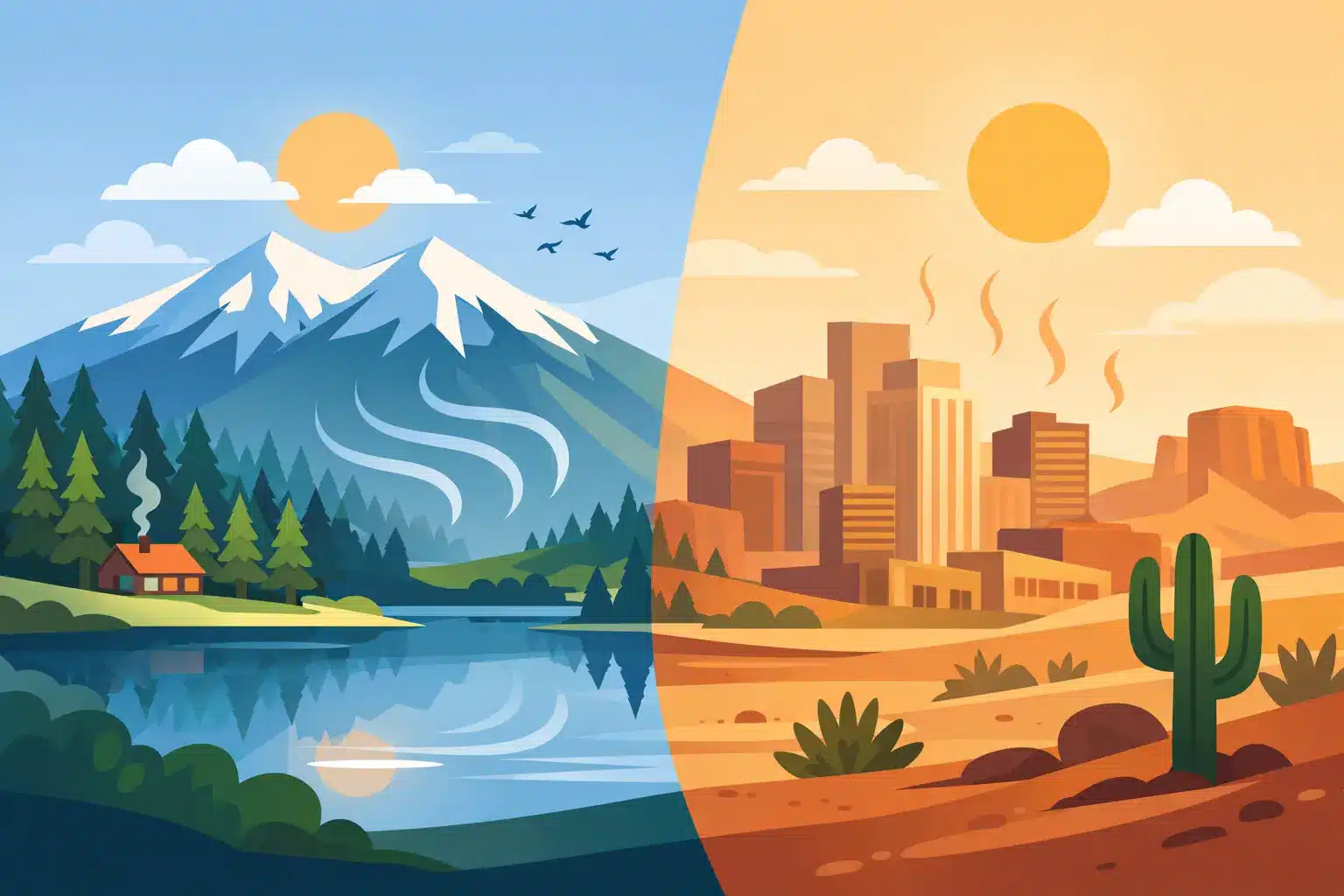
Leave Phoenix after breakfast in the middle of summer, point the RV north, and by afternoon you may be reaching for a light jacket. So, why is Flagstaff cooler when much of Arizona is deep into triple-digit heat? The short answer is elevation. The better answer is that Flagstaff’s high mountain setting changes nearly everything about the way a summer day feels – from afternoon shade beneath ponderosas to the cool air that settles in after sunset.
At roughly 6,900 feet above sea level, Flagstaff sits more than a mile high. That is a serious change from the desert floor, not a small bump in the road. Add dry mountain air, forest cover, frequent summer clouds, and crisp nighttime cooling, and you get one of Arizona’s most reliable warm-weather resets.
Why Is Flagstaff Cooler Than Phoenix and Sedona?
Elevation does the heavy lifting. As air rises higher into the atmosphere, it expands and generally cools. A common rule of thumb is that temperatures drop about 3.5 degrees Fahrenheit for every 1,000 feet of elevation gain, though real-world weather is never quite that tidy.
Phoenix sits near 1,100 feet. Flagstaff is close to 6,900 feet. That difference of nearly 5,800 feet can account for a dramatic temperature gap, especially in summer. On a day when Phoenix is pushing past 105 degrees, Flagstaff may be in the 70s or low 80s. It is not always a 20-degree difference, but it often feels like entering another season.
Sedona offers a welcome break from the Valley, yet it sits much lower than Flagstaff at about 4,300 feet. Its red rock scenery absorbs plenty of sun, and summer afternoons can still run hot. Flagstaff’s extra elevation, higher latitude, and broad ponderosa forest give it a stronger cool-down effect.
That is why so many RV travelers from Phoenix, Tucson, Las Vegas, Southern California, and other hot-weather stops put Flagstaff on the summer route. You can trade the blast-furnace afternoon for a trail walk, a downtown patio, and a night comfortable enough to sleep with the windows cracked.
High Elevation Changes the Whole Daily Rhythm
The biggest surprise for first-time visitors is often not the afternoon temperature. It is the evening.
Desert cities hold onto heat after sunset because pavement, roofs, rock, and dense development soak up solar energy all day. Flagstaff has developed areas, of course, but its mountain setting and lower humidity allow heat to escape more quickly after dark. Cool air also tends to drain downhill and settle in lower spots overnight.
That creates the kind of summer evenings RV travelers remember: a warm meal outside, a quiet loop around camp, and a sweatshirt close by once the stars come out. June nights can be brisk. July and August may feel milder, but rain-cooled air can still make a light layer useful. In spring and fall, temperatures can drop sharply after a sunny afternoon.
For camping, that range is part of the appeal. Your air conditioner does not have to fight through a hot night, and mornings feel made for coffee outdoors. The trade-off is simple: pack for more than the forecast high. Shorts and hiking shoes belong in the rig, but so do a fleece, rain jacket, and an extra blanket.
Pine Forests Help It Feel Cooler, Too
Flagstaff’s elevation sets the baseline, while its forests improve the experience at ground level. The city is surrounded by one of the largest ponderosa pine forests in the country, and those tall pines create real shade where it counts – on trails, picnic tables, campsites, and neighborhood streets.
Shade does not lower the regional air temperature by itself. But it keeps direct sun off people, pavement, and RV exteriors, which can make a major difference in perceived comfort. A 78-degree afternoon in full high-altitude sun can still feel intense. Step under the pines, and it feels like the mountain version of turning down the thermostat.
The forest also changes the mood. Instead of heat shimmering off a parking lot, you get pine scent, filtered light, and the sound of wind moving through the canopy. It is one reason Flagstaff feels restorative rather than simply cooler on a weather app.
Dry Air Brings Relief – and a Few Things to Plan For
Flagstaff’s air is usually much drier than the humid parts of the country, and dry air helps sweat evaporate from your skin. That evaporation is your body’s natural cooling system, so a warm afternoon here can feel more manageable than the same temperature in a humid climate.
Still, dry mountain air has a practical side. You may get thirsty faster than expected, especially after driving up from lower elevations or heading out on a hike. The sun is stronger at nearly 7,000 feet, too. Even on a pleasantly cool day, sunscreen, water, sunglasses, and a hat are smart trail companions.
If you are arriving with kids, pets, or grandparents in the group, give everyone a little time to adjust. Most visitors do fine, but moving quickly from sea level or desert elevation into a long hike can leave people winded. Start with an easy walk, drink more water than usual, and save the bigger adventure for tomorrow.
Summer Monsoons Can Cool an Afternoon Fast
From roughly July into September, Flagstaff’s summer monsoon season adds another layer to the cool-weather story. Moisture moves into Arizona, clouds build over the mountains, and afternoon storms can roll in with sudden wind, rain, lightning, and a noticeable temperature drop.
A monsoon storm is not just a scenic backdrop. It can turn a sunny trail day into a weather-awareness day quickly. If thunder is audible, it is time to leave exposed ridges, open meadows, and high viewpoints. The safest place is inside a fully enclosed vehicle or building, not under a tree or a picnic shelter.
For RV guests, monsoon season rewards a little preparation. Secure chairs and awnings before leaving camp, keep windows closed when storms are nearby, and check the forecast before setting out for the Grand Canyon, Sedona, or a day at Arizona Snowbowl. Storms are often brief, and afterward the air can feel wonderfully fresh, but mountain weather deserves respect.
Cooler Does Not Mean Cold All Summer
Flagstaff is a four-season mountain town, not a permanently chilly one. June can bring bright, dry afternoons that reach the 80s. Before monsoon moisture arrives, the sun can feel surprisingly powerful. During a heat wave, temperatures can climb higher than visitors expect.
The difference is that Flagstaff usually offers more recovery. Mornings begin cooler, shaded trails stay pleasant longer, and evenings often reset the day. That rhythm makes it easier to plan an active trip without building the entire schedule around escaping the heat indoors.
Winter tells the other side of the elevation story. The same high terrain that makes summer so appealing also brings snow, freezing nights, and changing road conditions. If you are traveling outside the warm season, check the forecast closely and prepare your RV for below-freezing temperatures. Cool elevation is a gift in July; in January, it calls for a different checklist.
Making the Most of Flagstaff’s Mountain Weather
The best Flagstaff days are not about cramming in every attraction. They are about using the weather well. Start early for a bike ride or hike, take a relaxed midday break in town or beneath the trees, then head back out when the light turns golden. A late dinner downtown, stargazing, or a simple campfire-style evening can be the perfect finish.
A comfortable home base makes that pace easier. At Flagstaff Mountain RV & Campground, spacious full-hookup sites, fast WiFi, clean showers, laundry, and a quiet setting just a mile from downtown let you enjoy the mountain break without giving up the practical things that make RV travel work. Bring the dog, stock up at the convenience market, and make room in the itinerary for an unhurried day.
Flagstaff’s cool weather is not a mystery once you see the terrain. It is what happens when high elevation, pine country, dry air, and summer storms all share the same patch of Northern Arizona. Pack a layer, fill the water bottle, and leave a little space in your plans for the kind of evening that makes you want to stay one more night.