
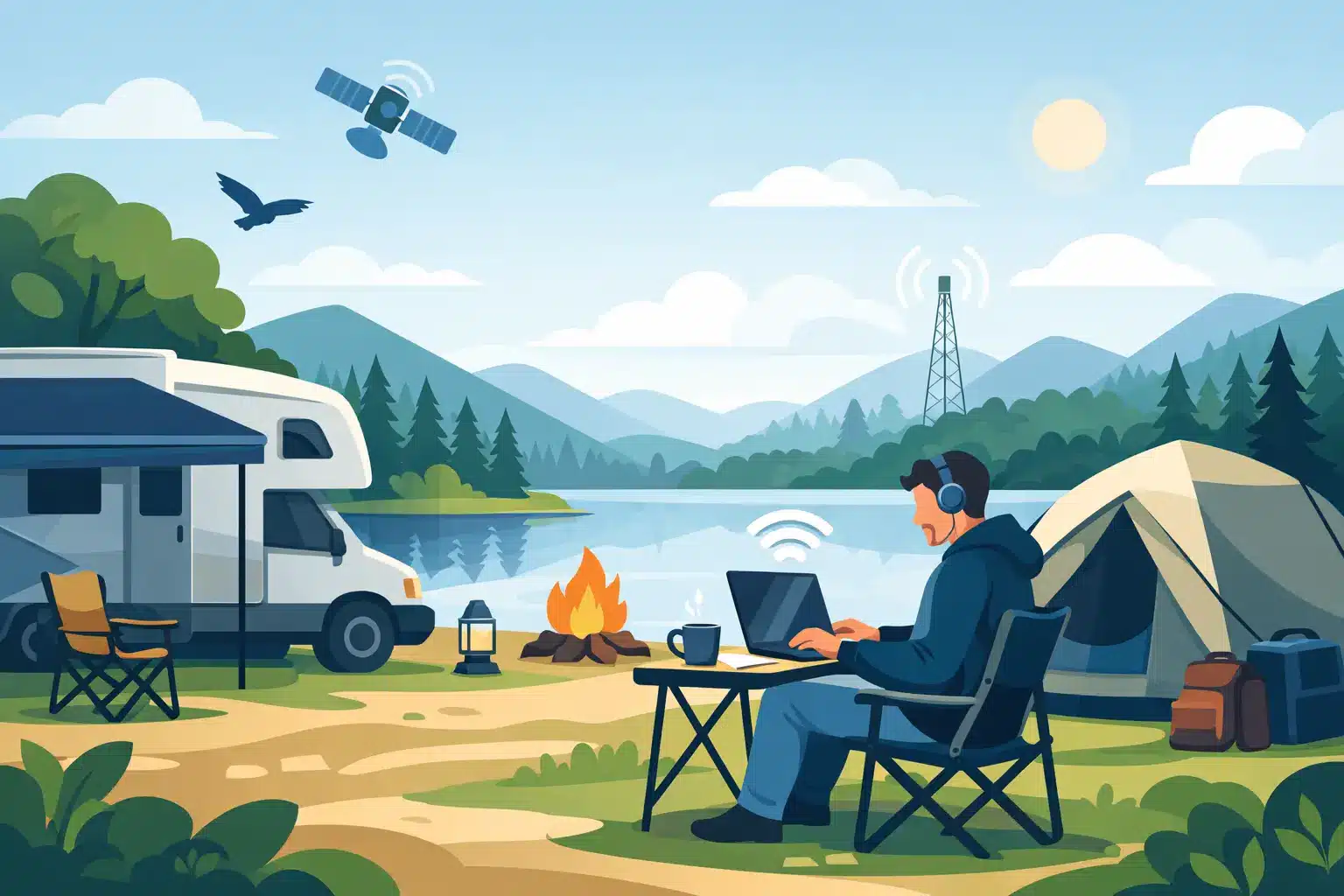
A Monday video call feels different when the view outside your RV window includes ponderosa pines instead of a parking lot. But to work remotely from campground sites successfully, the mountain setting has to support more than a great backdrop. You need reliable power, WiFi you can actually use, a comfortable place to focus, and enough quiet to hear yourself think.
That is the sweet spot of a well-planned work-and-travel stay. Flagstaff’s cool elevation, trail access, and one-mile proximity to downtown create an especially good rhythm for remote workers who want their weekdays handled and their evenings wide open.
Work remotely from a campground with a real setup
The best campground workday starts before you open your laptop. Treat your RV site as a temporary office, not just a place to sleep between adventures. Full hookups matter because they take the daily power equation off your mind. You are not rationing battery life, watching your inverter, or deciding whether you can make one more coffee before a call.
A stable internet plan matters just as much. Campground WiFi can be excellent for email, messaging, browser-based work, and many video meetings, but every remote job has different demands. A writer working in cloud documents has a different threshold than a designer uploading large files or a developer moving code repositories all day.
Before booking, think honestly about your work requirements. Ask how much bandwidth your job uses, whether your meetings need uninterrupted video, and whether you need a backup connection. Keeping a mobile hotspot ready is smart insurance, particularly if a presentation, interview, or deadline cannot wait. It is not overplanning. It is what lets you relax once you close the computer.
At Flagstaff Mountain RV & Campground, fast WiFi and full-hookup sites make it easier to build that kind of dependable base. The point is simple: your work setup should support the trip, not become the entire trip.
Build a workspace you will actually use
RV dinettes are practical, but they are not automatically ergonomic. A few small adjustments can make a long work block far more comfortable. Use a laptop stand or a sturdy raised surface to bring the screen closer to eye level, then add a compact keyboard and mouse if you have them. A supportive camp chair can work for short sessions outdoors, though it is worth returning inside for longer meetings or focused work.
Also consider light and sound. Early morning sun can create screen glare, while a dark RV interior can feel sleepy by midafternoon. Set up where you have indirect natural light, close shades when needed, and keep headphones close at hand. Noise-canceling headphones help with conference calls, but a simple pair with a clear microphone can be enough in a quiet park.
Your neighbor did not come to the mountains to hear your quarterly planning meeting, and you probably did not come to hear theirs. Keep calls indoors when possible, speak at a normal volume, and choose a site setup that respects the calm everyone is here for.
Pick a campground that fits your work style
Not every beautiful campground makes a practical remote-work base. A remote forest site may be perfect for a two-night unplug, but it can introduce challenges around cellular coverage, generator noise, power limits, and long drives for groceries or a coffee-shop change of scenery.
For a stay that includes real work hours, location changes the whole experience. Being near town means you can restock between calls, handle an errand without turning it into an expedition, and step out for dinner after a long day. At the same time, a peaceful campground lets you leave city traffic, crowded hotel hallways, and resort bustle behind at night.
Flagstaff offers that balance well. Guests can spend a morning at their desk, take a lunch break beneath big mountain skies, and be on a trail or at a local restaurant soon after signing off. If your schedule runs on Eastern or Central Time, the time difference can even create an early finish. Start early, wrap up early, and let the afternoon belong to Northern Arizona.
Plan around the season, not just the calendar
Flagstaff’s high-country weather is a major reason travelers come here when lower-elevation cities are baking. Summer days are often comfortably cool, but afternoon monsoon storms can arrive quickly. A weather-aware routine keeps a surprise downpour from becoming a workday problem.
Keep outdoor gear and electronics protected, secure your awning when conditions call for it, and avoid building your entire work plan around sitting outside. A covered outdoor moment is great. A reliable indoor workspace is better when the forecast shifts.
Shoulder seasons have their own appeal: crisp mornings, changing leaves, quieter trails, and fewer hot-weather distractions. They also call for layers. If your workday starts before sunrise, you may want heat on and coffee ready before the mountain air warms up.
Create a workday that leaves room for the reason you came
The biggest mistake remote travelers make is trying to work as though they never left home, then squeezing an entire vacation into the hours after dark. Campground work is better when you set clear lines around it.
Start with your fixed commitments. Put meetings, deadline blocks, and client calls on the calendar first. Then claim a short daily outdoor break before the day gets away from you. It might be a 20-minute walk, a quiet coffee outside, or a quick loop through town for lunch. That small reset is often enough to make an ordinary workday feel like travel again.
After hours, choose one attainable plan instead of a giant itinerary. A sunset walk, a local meal, a scenic drive, or a simple camp dinner is plenty after a full day online. Save the bigger outings for days off, when you can head toward Sedona, Walnut Canyon, Arizona Snowbowl, or the Grand Canyon without checking the clock every half hour.
If you are traveling with a partner, kids, or friends, agree on work boundaries early. Tell them when you are truly unavailable and when you can join them. Clear expectations prevent a work call from feeling like it stole the day, and they help everyone make better use of the open hours.
Keep campground etiquette part of the plan
A remote-work stay works best when you remember that a campground is a shared space. It is not a private office complex, and that is part of its charm. Respect quiet hours, keep speakerphone calls inside your RV, and avoid spreading work equipment across common areas for long stretches.
Power use deserves some awareness, too. Full hookups offer welcome flexibility, but it is still wise to know what is running. Space heaters, coffee makers, air conditioners, and office gear can add up. Use equipment thoughtfully and make sure cords, chairs, and cables do not create a tripping hazard around your site.
The same goes for pets. A dog may love the new smells and trail time, but barking during a client call is not ideal for anyone. Schedule a walk before a big meeting, keep your pet comfortable, and use the pet-friendly setting with the same consideration you would at home.
A simple arrival routine prevents weekday surprises
Give yourself a little setup time when you pull in, especially before a workweek. Get level, connect your hookups, test WiFi from inside the RV, identify the strongest spot for your hotspot if you carry one, and locate your chargers and headphones before you need them.
Then look at the practical side: laundry, market supplies, food for easy lunches, and the route you would take into town. Clean showers and on-site laundry may not sound glamorous, but they make a multi-week stay feel easy. Fewer chores spent hunting around means more time for the part of Flagstaff you came to enjoy.
A campground office does not need to be fancy. It needs to be calm, prepared, and connected enough for the work in front of you. Once the laptop closes, step outside for a breath of pine air and make the most of the altitude.